Learning disabilities are disabilities. That statement shouldn’t be controversial, but it still catches people off guard.
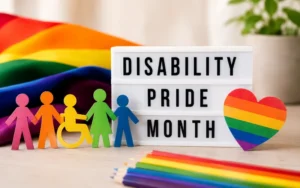
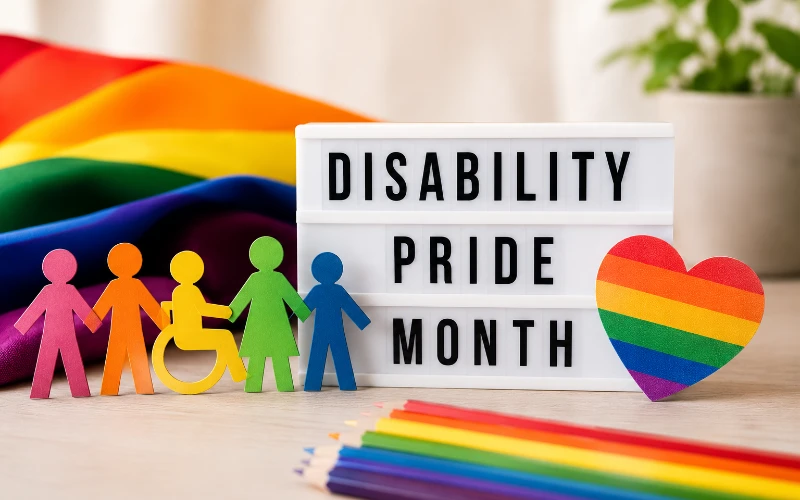
July is Disability Pride Month, a celebration tied to the anniversary of the Americans with Disabilities Act (ADA), signed into law by President George H.W. Bush on July 26, 1990. The ADA gave millions of Americans with disabilities civil rights protections against discrimination in employment, education, and public life. Thirty-six years later, those protections remain a lifeline for people with dyslexia, ADHD, dyscalculia, and other learning differences.
The 2026 theme, selected by The Arc’s National Council of Self-Advocates, is “The World Works Better With Us.” For the learning disability community, that message hits close. The world does work better when a student with dyslexia gets the right accommodations, when an employee with ADHD can structure their workday around how their brain actually functions.
The gold stripe belongs to you
The Disability Pride Flag, created by disabled advocate Ann Magill and redesigned in 2021, features five diagonal stripes on a charcoal background. Each stripe represents a different category of disability. The gold stripe represents neurodiversity, which includes dyslexia, ADHD, dyscalculia, and other learning disabilities.

That stripe exists because learning disabilities are neurological. They are brain-based differences in how people process information, not deficits in intelligence or effort. The National Center for Learning Disabilities estimates that 1 in 5 people in the United States has a learning or attention issue. That’s roughly 70 million people.
A gold stripe on a flag won’t fix the stigma. But it signals something important: learning disabilities belong in this conversation.
Why pride is complicated for people with learning disabilities
Disability pride looks different when your disability is invisible. No one sees dyslexia. No one watches ADHD operate in real time unless they know what to look for. That invisibility creates a specific kind of isolation, the kind where people question whether your disability even counts.
Many people with learning disabilities spend years masking their struggles. They develop workarounds, avoid situations that expose their challenges, and absorb the message that they should just “try harder.” Pride means rejecting that narrative. It means saying the problem was never effort, it was a system built without you in mind.
The ADA and the Individuals with Disabilities Education Act (IDEA) guarantee specific protections. Students with documented learning disabilities are entitled to accommodations through IEPs and 504 Plans. Adults with ADHD or dyslexia can request workplace accommodations under the ADA. These rights exist because people fought for them.
What disability pride month can look like for the LD community
Know your rights. The ADA, IDEA, and Section 504 of the Rehabilitation Act protect people with learning disabilities. If you or your child has a diagnosed learning disability, you are entitled to accommodations at school and at work. Understanding these laws is the first step toward advocating for yourself. LDRFA’s Know Your Rights page breaks down each law and what it means for you.
Talk about it. The silence around learning disabilities feeds stigma. When someone shares their experience with dyslexia or ADHD, it gives others permission to do the same. Famous people like Simone Biles, Michael Phelps, and Whoopi Goldberg have spoken publicly about their learning differences. Their visibility matters, and so does yours.
Get connected. LDRFA provides links and recommendations for free dyslexia screening tools, a growing library of assistive technology resources, and information on types of learning disabilities to help you understand what you’re dealing with and what support exists. Parents can also review our guide to assistive technology laws to understand what schools are required to provide.
Support organizations doing the work. Nonprofits like LDRFA depend on donations to keep resources free and accessible. If Disability Pride Month moves you to act, consider making a donation that helps fund the tools, information, and advocacy that the learning disability community needs year-round.
The ADA turned 36 this year. It changed the law. It didn’t change every classroom, every workplace, or every hiring manager’s assumptions about what someone with dyslexia can accomplish.
Disability Pride Month is a reminder that learning disabilities are real, they are protected, and they are nothing to hide.