One in five people has dyslexia. Nearly half of all incarcerated individuals are dyslexic. Those two facts alone should stop you cold.
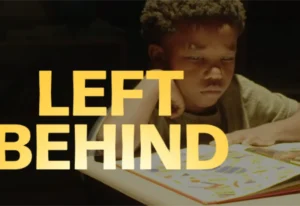
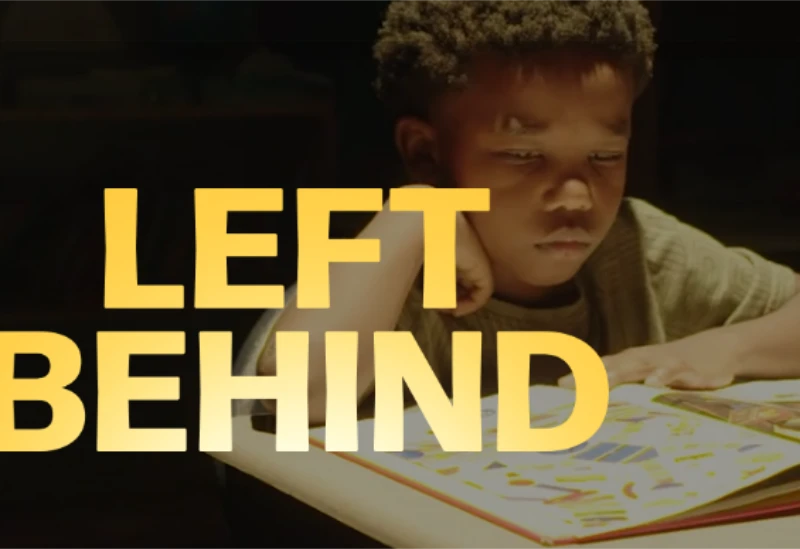
The documentary Left Behind, directed by Emmy Award-winning filmmaker Anna Toomey, connects those numbers to real families fighting a system that was never built to support their children. The film follows five mothers in New York City as they push to create something that shouldn’t be radical: the first public school designed for students with dyslexia in the nation’s largest school district.
What the film covers
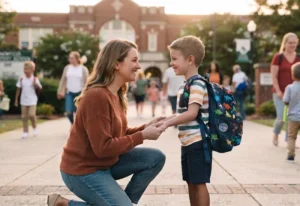
Left Behind tracks families across three years of advocacy, frustration, and small victories. We meet Naomi, whose three children have dyslexia, watching her youngest son Lucas beg not to go to school. We meet Fatima, who spends months trying to get her 7-year-old son Aden tested for dyslexia, only to be told the year-long waitlist is her only option through Medicaid. We meet Akeela, whose daughter Soleil’s signs of a learning disability get misread as behavioral problems by her kindergarten teacher.
The film also introduces Kareem Weaver, who heads the NAACP’s Education Committee in Oakland, California. Kareem’s nephew Elijah wasn’t screened for dyslexia until he was incarcerated. Not in elementary school. Not in middle school. In prison. Kareem calls dyslexia the defining civil rights issue of our time, and Elijah’s story makes it hard to argue.
These families ultimately band together to found the South Bronx Literacy Academy, which opened its doors in September 2023 as one of only two public schools for dyslexia in the entire country.
The numbers behind the mission
Roughly 200,000 students in New York City’s public schools are dyslexic. Getting a private diagnosis costs between $6,000 and $10,000. Most schools don’t screen for it. Teachers aren’t trained to recognize it. And the Individuals with Disabilities Education Act (IDEA), the federal law meant to protect these students, contains “exclusionary factors” that evaluators can wield to deny testing altogether.
Meanwhile, 60 to 80 percent of incarcerated youth in NYC have reading and writing disabilities. That’s three out of every four young people in the city’s prisons.
The school-to-prison pipeline isn’t an abstraction. For students with undiagnosed dyslexia, it’s a conveyor belt.
About the filmmaker
Anna Toomey started her career as an Emmy Award-winning producer at ABC News and Good Morning America. Left Behind is her first independent documentary, and it grew from personal experience: her own son was diagnosed with dyslexia, and she discovered how few resources existed for families like hers. Among the film’s producers is Larry Mullen Jr. of U2, who is also a parent of a dyslexic child.
The film premiered at the Woodstock Film Festival in October 2024, won at the Soho International Film Festival in 2025, and received a nomination for the NAACP Image Award for Outstanding Documentary Film in 2026.
How to watch
Left Behind is currently available for free virtual screening through Learning Ally on Kinema. The film runs 77 minutes and is available on-demand through October 31, 2026. Once you start watching, you have 48 hours to finish.
Watch it here: Left Behind on Kinema
Learn more: leftbehindthefilm.com
Movie guide: film discussion guide
Why this matters for the LD community
The International Dyslexia Association estimates that 15 to 20 percent of the global population has dyslexia, which translates to more than a billion people worldwide. In the United States alone, up to 1.5 million students are dyslexic. And yet most of these students attend schools with no specialized instruction, no screening or assessment protocols, and no plan to help them.
Left Behind makes the case that literacy is a civil right, not a privilege reserved for families who can afford private schools and private evaluations. It also makes something else clear: the students being failed aren’t failing. The systems around them are.
If you’re a parent navigating an IEP process, a teacher wondering why a student can’t seem to keep up, or an advocate working to close gaps in education, this film will give you both ammunition and urgency. If you need help understanding your options, our know your rights page breaks down the legal protections available to students with learning disabilities.
The LD Resources Foundation is committed to sharing resources like this film because awareness drives action. Every screening, every conversation, every shared link brings us closer to a system where no child gets left behind because of how their brain processes words on a page.