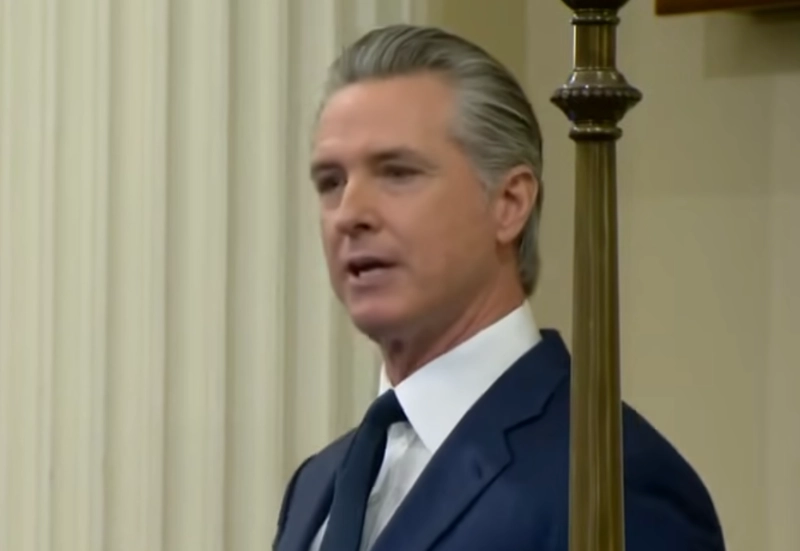
When people search for Gavin Newsom dyslexia, they’re often surprised to learn that one of the most prominent political leaders in the United States has navigated life with a learning difference since childhood. Gavin Newsom is the 40th Governor of California has openly discussed his struggles with reading and writing, offering a powerful example of how dyslexia doesn’t define a person’s potential.
In a world where dyslexic politicians and famous people with dyslexia are gaining more visibility, Newsom’s story stands out. It’s not just about overcoming challenges. It’s about reframing them. His experience highlights how learning disabilities in leadership can actually foster creativity, resilience, and big-picture thinking.
For families, educators, and individuals navigating dyslexia, his journey offers something deeper than inspiration. It provides proof that with the right support and mindset, success is not only possible, it can look different and even stronger. Let’s take a closer look at how dyslexia shaped Newsom’s life and leadership.
Who Is Gavin Newsom?
Gavin Newsom is the Governor of California and a longtime figure in American politics. Before becoming governor, he served as Lieutenant Governor and Mayor of San Francisco, building a reputation for progressive policies and strong communication skills.
What makes his story especially relevant today is his openness about dyslexia. In an era where neurodiversity is finally getting attention, Newsom’s transparency helps normalize learning differences at the highest levels of leadership.
His experience matters because it challenges outdated assumptions. Leaders aren’t defined by perfect academic performance. Instead, they’re shaped by how they adapt, communicate, and connect with others.
When Was Gavin Newsom Diagnosed With Dyslexia?
Gavin Newsom has publicly shared that he was diagnosed with dyslexia around age five.
Dyslexia is a neurological learning difference that primarily affects reading, spelling, and writing. It’s not linked to intelligence, but misconceptions still persist. Many people wrongly assume dyslexia limits success, when in reality, it often comes with strengths like problem-solving and creativity.
According to organizations like the International Dyslexia Association, early diagnosis is key. Newsom’s early identification helped him receive support, even though the road wasn’t easy.
Gavin Newsom’s Childhood Struggles With Dyslexia
Challenges in School
Growing up, Gavin Newsom struggled significantly with reading, writing, and spelling, three foundational skills that traditional classroom instruction heavily relies on. Because he was diagnosed with dyslexia in early childhood, his mother chose not to tell him at the time, fearing the stigma of a learning disability label would follow him.
As a result, he spent years in a standard classroom setting that was not built with learners like him in mind, eventually cycling through five schools in seven years. He found himself placed in remedial programs, attending after-school sessions and summer school, navigating a system that measured him against standards that didn’t account for how his brain worked. This experience is far from unique. According to International Dyslexia Association, dyslexia affects an estimated 15–20% of the population, making it the most common language-based learning disability.
Emotional and Social Impact
Newsom’s dyslexia was accompanied by a painful shyness that caused him to sit in the back of the classroom and made him reluctant to participate in class discussions.
In school environments that place a premium on reading speed and written accuracy, students with dyslexia can quickly internalize the message that they are not capable, even when the opposite is true.
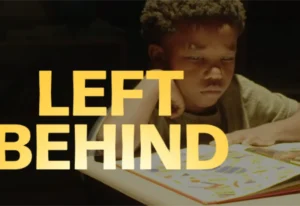
Newsom has described growing up feeling “behind, left out, lonely,” a sentiment that resonates with countless families navigating a similar path. That persistent sense of falling behind takes a real toll on self-esteem and confidence.
Social dynamics in school can compound this further, as children with learning differences may withdraw or feel isolated when they struggle with tasks their classmates seem to handle effortlessly. The emotional weight of dyslexia, left unaddressed, can follow a child well beyond the classroom.
Discovery and Understanding
When Newsom was in fifth grade, he discovered in his mother’s office a stash of papers reporting on his academic performance and describing something called dyslexia. It was a moment that, while jarring, finally gave him a reason for years of academic difficulty.
Recognizing dyslexia for what it is can be a pivotal moment for any individual. It reframes the story from one of failure to one of difference, and that distinction matters enormously.
As the Yale Center for Dyslexia and Creativity notes, dyslexia has no connection to a person’s overall intelligence. For Newsom, understanding his learning profile opened the door to developing strategies that worked for him.
His journey is a powerful reminder that with the right support and self-awareness, a dyslexia diagnosis is not a ceiling. It is a starting point for building on one’s unique strengths. You can hear Newsom speak about his experience firsthand in this video interview with Understood.org, where he talks with a 13-year-old who also has dyslexia.
How Gavin Newsom Overcame Dyslexia
Learning Strategies He Used
Newsom leaned heavily on audiobooks, verbal processing, and summaries rather than forcing himself through traditional reading methods that did not work for his brain.
He has described underlining and marking up everything he reads just to retain the information, noting that he could read five pages while daydreaming and not remember a single word without that habit.
Instead of fighting against his learning style, he adapted to it. He built routines around how his brain actually worked, leaning into verbal comprehension and hands-on engagement with material rather than passive reading.
This approach aligns closely with research from the Yale Center for Dyslexia and Creativity, which emphasizes that multisensory learning strategies, ones that engage hearing, speaking, and movement alongside reading, can be highly effective for individuals with dyslexia.
Developing Alternative Strengths
HAs Newsom found workarounds for the areas where he struggled, he naturally strengthened other skills. His verbal communication became one of the sharpest tools in his arsenal.
The ability to absorb information through listening and then articulate ideas clearly and persuasively is something Newsom developed out of necessity. Over time, it became one of his greatest professional assets.
His dyslexia pushed him to develop remarkable retention skills and the ability to think on his feet, traits he has credited directly to the overcompensation strategies he built during his years of struggling in school.
Those strengths did not go unnoticed. His ability to connect with people, read a room, and articulate ideas verbally helped lay the foundation for a political career that would eventually take him to the Governor’s office in California.
“Thinking Differently” Advantage
Newsom has been open about the fact that dyslexia forced him to approach problems from a different angle. When traditional paths were harder to access, he found other ways in.
That kind of cognitive flexibility is well documented among people with dyslexia. The Yale Center for Dyslexia and Creativity notes that many individuals with dyslexia demonstrate strengths in big-picture thinking, creative reasoning, and the ability to find unexpected solutions.
Newsom has called dyslexia the best thing that ever happened to him, not because it was easy, but because of what it required him to build in order to move forward.
That perspective shows up consistently in dyslexia success stories. The same challenges that make traditional schooling difficult can cultivate resilience, adaptability, and an instinct for innovation, traits that serve people with dyslexia well far beyond the classroom.
How Dyslexia Influenced His Political Career
Public Speaking and Communication Style
One of the most visible ways dyslexia has shaped Newsom’s career is in how he communicates publicly. He has been candid about the fact that reading from a prepared script is genuinely difficult for him.
For every minute of a speech, Newsom has said he spends roughly an hour in preparation, a ratio he himself has called “ridiculous,” but one that reflects just how much work goes into what many politicians do effortlessly.
Rather than leaning on teleprompters or scripted remarks, he defaults to conversational delivery. For many voters and audiences, that unscripted style reads as authenticity, a quality that is difficult to manufacture and one that has worked in his favor throughout his political career.
In a 2019 interview, Newsom admitted that public speaking and reading remain genuinely challenging for him, even after decades in public life. That honesty, rather than undermining him, has connected him to audiences who appreciate straightforwardness.
Leadership and Decision-Making
Dyslexia has also influenced how Newsom processes information and leads. Rather than getting caught up in fine print or procedural details, he tends to operate at the level of ideas, vision, and broad strategy.
This is consistent with what researchers have observed more widely. The Yale Center for Dyslexia and Creativity has found that many people with dyslexia develop strong big-picture thinking skills, often because they have had to find ways around conventional linear processing from an early age.
That ability to zoom out, identify patterns, and move quickly between complex ideas can be a significant advantage in leadership roles, where the ability to adapt and prioritize often matters more than absorbing every detail on a page.
Newsom’s career reflects that style of leadership. From healthcare reform in San Francisco to statewide literacy initiatives in California, his policy work has tended to focus on sweeping change rather than incremental adjustment.
Public Perception and Criticism
Newsom’s dyslexia has not always been received with understanding. At times it has been used as a point of criticism or even ridicule, reflecting a broader stigma that still surrounds learning disabilities in public life.
In 2026, former President Trump repeatedly suggested that Newsom’s dyslexia made him unfit for the presidency, framing a learning difference as a measure of intelligence, a claim that has no basis in research or fact.
The Yale Center for Dyslexia and Creativity is clear on this point, noting that dyslexia has no connection to a person’s overall intelligence, and that many individuals with dyslexia demonstrate average or above-average cognitive ability.
Responses to that criticism were swift, with advocates and researchers pushing back and using the moment to raise awareness about what dyslexia actually is. In many ways, the episode became an unexpected opportunity to shift the public conversation toward greater understanding and respect for neurodiversity.
Newsom himself has leaned into that conversation, using his platform to advocate for dyslexia screening and literacy programs. In 2023, he signed legislation mandating dyslexia screenings for children between kindergarten and second grade, making California the 40th state to adopt such a policy.
Gavin Newsom’s Advocacy for Dyslexia Awareness
Education Policy and Dyslexia Awareness
Gavin Newsom has used his platform as governor to move dyslexia from a personal story into the realm of public policy, helping ensure that the next generation of students does not face the same years of confusion and frustration that he did.
In 2023, Newsom signed legislation requiring dyslexia screenings for all children between kindergarten and second grade, making California the 40th state to adopt such a requirement. Early screening is widely regarded as one of the most effective tools available for improving outcomes for children with dyslexia.
California has also passed legislation requiring elementary school teachers to receive training in the science of reading and mandating the use of evidence-based teaching materials. These are meaningful steps toward a classroom environment that works for students who learn differently.
Newsom has pointed directly to his own experience as the driving force behind these efforts, stating that learning challenges are not a weakness or something to be ashamed of. For families navigating a dyslexia diagnosis, having a public figure in that position speak from lived experience carries real weight.
The International Dyslexia Association has long advocated for exactly this kind of policy action, emphasizing that early identification and appropriate instruction can dramatically improve reading outcomes for children with dyslexia.
Children’s Book: Ben and Emma’s Big Hit
In 2021, Newsom co-authored a children’s book called “Ben and Emma’s Big Hit,” drawing directly from his own childhood experiences with dyslexia. The book was written with young readers in mind, particularly those who are beginning to recognize that they learn differently from their peers.
The story is designed to help children feel seen and understood at a stage when those feelings can be hardest to come by. For a child sitting in a classroom wondering why reading feels impossible while everyone around them seems to manage it easily, a book that reflects that experience back to them can be genuinely meaningful.
Newsom has said that as a child, he still struggles with dyslexia and that the trauma from those early school years still stays with him. That honesty is what makes the book resonate. It does not offer a tidy resolution. It offers recognition, which is often exactly what children with learning differences need most.
The book also serves as a conversation starter for parents and educators, opening the door to discussions about learning differences in a way that is accessible and age-appropriate.
Impact on Families and Children
When a public figure speaks openly about living with dyslexia, the ripple effect on families can be significant. Parents who have watched their child struggle in school, wondering what is wrong, may find in Newsom’s story both an explanation and a source of hope.
For children, seeing someone who has held some of the highest offices in the country talk openly about not being able to read a speech without hours of preparation, or about finding stacks of papers in his mother’s desk that finally explained years of confusion, sends a powerful message. Dyslexia does not determine what a person is capable of.
Why Gavin Newsom’s Story Matters for the Dyslexia Community
Gavin Newsom’s journey from a child sitting in the back of the classroom, convinced he was stupid, to the governor of the most populous state in the country is more than an inspiring biography. It is a living example of what becomes possible when a person understands how their brain works and builds from that knowledge rather than fighting against it.
For the dyslexia community, visibility at that level matters. Stigma thrives in silence, and for generations, learning disabilities were treated as something to hide rather than understand. Every time a public figure speaks honestly about their diagnosis, the conversation shifts a little further toward awareness, acceptance, and action. That shift has real consequences for the millions of children currently sitting in classrooms where their needs are going unmet, and for the parents who are searching for answers.
Newsom’s story also reinforces something that researchers and advocates have long known: dyslexia is not a measure of intelligence or potential. It is a different way of processing language, and when the right support is in place early enough, the outcomes can be transformative.
Common Myths About Dyslexia
One of the most persistent and damaging misconceptions about dyslexia is that it is connected to intelligence. It is not. The Yale Center for Dyslexia and Creativity is explicit on this point, noting that dyslexia affects people across the full spectrum of intellectual ability, including many individuals with average or above-average intelligence. Gavin Newsom is one example among millions. The belief that struggling to read means struggling to think has held countless children back from receiving the support they actually need, and it is a belief that the research simply does not support.
A related myth is that dyslexia prevents success. In reality, the list of leaders, entrepreneurs, scientists, and creatives who have dyslexia is long and well documented. What dyslexia can prevent, when left unaddressed, is access to the right tools and support systems. That is a very different problem, and one that is solvable. With early identification, appropriate instruction, and the right accommodations, children with dyslexia can and do thrive academically and professionally.
It is also worth clarifying that dyslexia is not purely a reading challenge. While difficulty with reading is the most recognized symptom, dyslexia can also affect writing, spelling, verbal processing speed, and the ability to organize and express thoughts clearly. Understanding the full picture of how dyslexia presents is important for parents, teachers, and individuals seeking a diagnosis.
The National Institute of Child Health and Human Development has conducted extensive research into dyslexia and continues to be one of the leading sources for evidence-based information on the condition. For families looking to separate fact from fiction, their resources alongside those available through LDRFA are a strong place to start.
What Parents and Educators Can Learn From His Story
Gavin Newsom spent years in classrooms that did not understand how he learned, cycling through schools and remedial programs without anyone identifying the root cause of his struggles. He was five years old when he was diagnosed with dyslexia, but did not find out until fifth grade. Those are years that could have looked very different with earlier intervention and open communication.
Early Identification and Intervention Changes Outcome
Research from the International Dyslexia Association consistently shows that children who receive support in the earliest stages of reading development have significantly better long-term outcomes than those who are identified later. If a child is struggling with reading, spelling, or written expression in ways that seem out of step with their overall ability, that is worth exploring sooner rather than later. Waiting for a child to fall further behind before seeking answers is one of the most common and costly mistakes in early education.
Strength-Based Learning
How a child is taught matters just as much as what they are taught. Newsom found his footing not by mastering traditional reading methods, but by building strategies that worked for his brain, audiobooks, verbal processing, underlining, summarizing. Strength-based learning recognizes that every child has a unique profile of abilities, and that leaning into those strengths while supporting areas of difficulty produces far better results than focusing exclusively on what a child cannot do. The Yale Center for Dyslexia and Creativity has documented this approach extensively, highlighting how reframing a child’s learning difference as a different kind of ability can reshape their entire relationship with education.
Encouraging Confidence
Newsom has spoken about berating himself as a child, feeling stupid, and withdrawing from classroom participation out of shame. That experience is heartbreakingly common among children with unidentified or unsupported learning differences. A child who believes they are incapable will not take the risks that learning requires. Educators and parents who create environments where effort is valued, difference is normalized, and progress is celebrated at every scale give children with dyslexia something that no curriculum alone can provide.
Conclusion
Gavin Newsom’s story does not begin with success. It begins with a child who felt left behind, who spent years wondering why school felt so much harder for him than it seemed to for everyone else, and who eventually found out that his brain was simply wired differently.
That reframing, from “something is wrong with me” to “I learn differently,” is at the heart of what the dyslexia community has been working to communicate for decades. It is not a small shift. For a child sitting in a classroom feeling ashamed, it can be the difference between giving up and finding a way forward.
What makes Newsom’s story particularly valuable is that he has not left it behind. He has carried it into his public life, his policy decisions, and his advocacy work, using the weight of his platform to push for the kinds of changes that could have helped him as a child. Mandatory screening, evidence-based reading instruction, and open conversations about neurodiversity are not abstract policy goals. They are practical tools that change the daily reality of children and families navigating dyslexia right now.
For anyone reading this who is in the middle of that journey, whether as a parent trying to understand a child’s struggles, an educator looking for better tools, or an adult who is only now beginning to make sense of their own school experience, the most important takeaway is this. Dyslexia is not the end of the story. For Newsom and for countless others, it turned out to be one of the most defining and ultimately generative parts of it.
To learn more about dyslexia, explore available resources browse LDRFA.org or find support for yourself or someone you care about, reach out through the LDRFA Helpline.