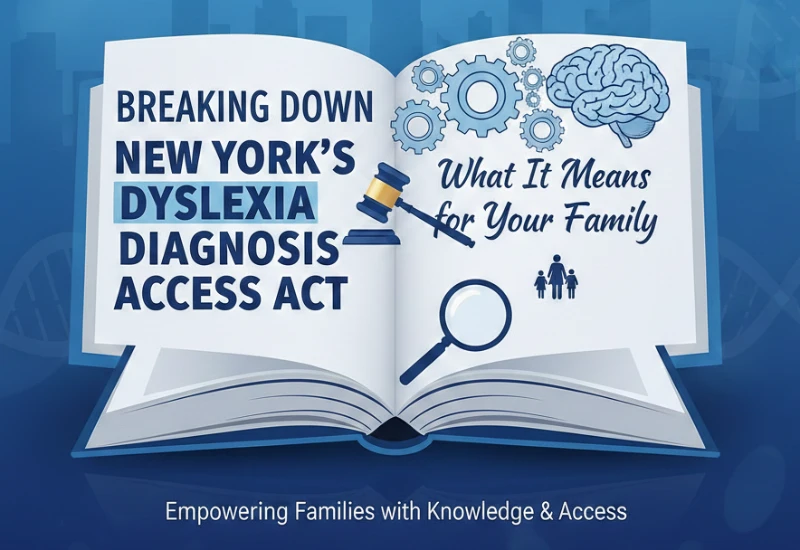
Here’s something that’ll make you breathe a little easier. If you’re a New York parent who’s been watching your child struggle with reading and wondering if it’s dyslexia, but couldn’t afford the thousands of dollars for proper testing, that barrier just came crashing down. New York’s new dyslexia testing bill, officially known as the Dyslexia Diagnosis Access Act (S.5481A/A.2898A), became law in December 2024. And it’s a total game-changer.
Table of Contents
ToggleFor years, families across New York faced an impossible choice. They knew something wasn’t right. Teachers mentioned concerns. Report cards showed struggles with reading and spelling. But comprehensive neuropsychological testing often cost upwards of $6,000, and insurance companies routinely denied coverage. This left countless kids without the dyslexia diagnosis they needed to get proper support in school. The new dyslexia diagnosis law changes all that by requiring private health insurance to cover these essential exams.
This isn’t just about testing, it’s about opening doors. When children get diagnosed early and receive appropriate interventions, they thrive. Without diagnosis, they often internalize failure, develop anxiety, and never reach their full potential. Let’s break down exactly what this law does and how it can help your family.
What the Dyslexia Diagnosis Access Act Actually Does
The law is straightforward but powerful. Starting January 1, 2025, private health insurance policies in New York must cover comprehensive neuropsychological examinations for dyslexia diagnosis. Here’s what that means in plain English.
Coverage Requirements
Insurance companies can’t refuse to cover these exams anymore. The law specifically requires coverage for neuropsychological testing that diagnoses dyslexia and determines the psychological, emotional, and educational wellness needs of the person being tested. This holistic approach recognizes that dyslexia affects more than just reading skills.
The coverage is capped at $6,000 per evaluation, which aligns with what these comprehensive exams typically cost. And here’s a smart detail: the cap is indexed to inflation and will be adjusted every two years based on the Consumer Price Index. That means the coverage amount will keep pace with rising costs.
Please Support. Together, we can make a difference!
Who Qualifies for Coverage
Not every child automatically qualifies, and that’s actually by design. The law focuses coverage on students who show clear risk factors. Your child qualifies if they meet any one of these criteria:
They have a family history of dyslexia. Since dyslexia is highly hereditary (25% to 65% of children with dyslexia have a dyslexic parent), this makes perfect sense.
They’re a student who has failed literacy screening benchmarks. Specifically, kindergarteners or first graders who fail two benchmarks, or students in second grade and above who fail one benchmark and are deemed at risk by their instructor or school.
Their pediatrician identifies them as at risk. If your child’s doctor uses a valid and reliable screening tool and recommends neuropsychological testing, that’s grounds for coverage.
They have a history of risk factors that impact learning. This includes things like fetal toxin exposure, prematurity, or neurological disorders such as epilepsy.
These criteria are smart because they target kids who genuinely need evaluation while keeping costs manageable for insurance companies. If your child shows any of these risk factors, they qualify for coverage.
Why This Law Matters So Much
Let’s talk numbers for a second. Research shows that as many as one in five children may have dyslexia or another phonemic awareness issue. That’s 20% of students. But here’s the kicker: without proper diagnosis, most of these kids never get the specialized instruction they need.
The Real Cost of No Diagnosis
When dyslexia goes undetected, the consequences ripple through a person’s entire life. Studies document increased rates of anxiety and depression in people with undiagnosed dyslexia. Educational outcomes suffer dramatically. Employment rates drop. Income levels fall. There’s even evidence of increased incarceration rates among adults with undiagnosed learning disabilities.
These aren’t just statistics, they’re real kids who internalize their struggles as personal failures rather than recognizing they have a specific learning disability that can be addressed with proper intervention.
The Power of Early Identification
On the flip side, comprehensive neuropsychological exams do more than just diagnose dyslexia. They provide a complete picture of how a child’s brain processes information. The results include detailed recommendations for educational support, emotional wellness strategies, and psychological interventions if needed.
When families have this information, they can advocate effectively for their children in school. They can request appropriate accommodations under Section 504 or seek special education services under IDEA. They can explain to their child that struggling with reading doesn’t mean they’re not smart, it means their brain works differently and they need different tools to succeed.
How the Law Came to Be
The Dyslexia Diagnosis Access Act wasn’t an overnight success. Assembly Member Robert Carroll introduced the bill (A.2898) in February 2023, with companion legislation in the Senate (S.5481). The bill moved through committee review, was amended in May 2023 to refine its language, and finally passed both chambers with unanimous support in 2024.
Governor Kathy Hochul signed it into law in December 2024 as Chapter 548 of the Laws of 2024. The unanimous passage tells you something important: lawmakers across the political spectrum recognized this was simply the right thing to do.
The legislative findings that accompany the law paint a clear picture. Lawmakers acknowledged that comprehensive neuropsychological exams are “recognized as the most effective way to positively diagnose dyslexia,” but noted these exams “are often administered over the course of two days and currently may cost in excess of six thousand dollars but are typically not paid for by health insurance, making them unaffordable to many families.”
In other words, the legislature saw families being priced out of essential diagnostic services and decided to fix it.
What Happens Next: Accessing Coverage
So your child qualifies under one of the criteria. Now what? Here’s what you need to know about actually using this coverage.
Starting Your Journey
First, talk to your child’s pediatrician or school. If you’re seeing signs of dyslexia (difficulty with phonological awareness, trouble with spelling, reading slower than peers, avoiding reading tasks), document these concerns. Teachers’ observations carry weight, so request a meeting to discuss your child’s literacy benchmarks.
If your child has failed screening benchmarks or if their pediatrician identifies risk factors, you’ll have the documentation needed to request insurance coverage. Contact your insurance company directly and ask about their process for pre-authorization of neuropsychological testing for dyslexia.
Finding Qualified Evaluators
Not every psychologist performs comprehensive neuropsychological evaluations. You’ll want to find someone who specializes in learning disabilities and has specific expertise in dyslexia assessment. Ask your pediatrician for referrals, check with local dyslexia organizations, or contact LDRFA’s helpline for guidance.
The evaluation itself typically takes place over two sessions and includes cognitive testing, academic achievement measures, processing speed assessments, and evaluations of memory and executive function. It’s thorough, and that’s exactly what you want.
Using the Results
Once you have the evaluation results, you’re armed with powerful information. If your child is diagnosed with dyslexia, share the full report with their school. Request a meeting to discuss accommodations or to initiate an evaluation for special education services if appropriate.
The evaluation should include specific recommendations for instruction. These might include structured literacy programs like Orton-Gillingham, multisensory teaching approaches, assistive technology tools, or specific accommodations like extended time on tests.
Frequently Asked Questions
Does this law apply to all insurance in New York?
The law specifically covers private health insurance policies that provide coverage for physician services, medical, or major medical comprehensive-type coverage. It applies to policies issued, renewed, modified, or amended on or after January 1, 2025. If you have insurance through your employer or purchase it privately, you’re likely covered. Medicaid and other public insurance programs may have different coverage rules.
What if my insurance company denies coverage?
If your child meets one of the qualifying criteria and your insurance denies coverage, you have appeal rights. Document everything. Keep records of failed literacy screenings, pediatrician recommendations, or family history of dyslexia. The law is clear about coverage requirements, so denials that don’t have legitimate grounds can be challenged. Contact LDRFA’s helpline if you need advocacy support.
Can adults use this coverage for dyslexia testing?
The law’s qualifying criteria focus primarily on students and children, particularly around literacy screening benchmarks and pediatrician recommendations. However, the coverage isn’t explicitly age-limited. If an adult meets criteria like having a family history of dyslexia or a history of neurological disorders, coverage might apply. Check with your insurance company about their interpretation.
How often can someone get tested under this coverage?
The law doesn’t specify limits on how many times someone can be tested. Comprehensive neuropsychological evaluations are typically done once, with shorter follow-up assessments if needed to measure progress or update educational plans. The $6,000 cap appears to apply per evaluation, not per lifetime, but individual insurance policies may have their own guidelines.
What happens if the evaluation costs more than $6,000?
The law caps required coverage at $6,000 (adjusted for inflation). If an evaluator charges more than this amount, families would be responsible for the difference. When seeking an evaluator, ask upfront about their fees and whether they accept insurance. Many qualified evaluators work within the typical cost range, making out-of-pocket expenses minimal or nonexistent.
The Bigger Picture
New York’s Dyslexia Diagnosis Access Act represents more than just insurance coverage. It signals a fundamental shift in how we think about learning disabilities and access to diagnosis.
For too long, comprehensive evaluation has been a privilege of families who could afford to pay out of pocket. That created a two-tier system where children from wealthy families got diagnosed and received intervention, while kids from middle-class and lower-income families struggled without answers.
This law levels the playing field. It recognizes that dyslexia diagnosis is a medical necessity, not a luxury. And it acknowledges that early identification and intervention represent investments in children’s futures that pay dividends throughout their lives.
As this law takes effect, we’ll likely see an increase in dyslexia diagnoses across New York. That’s not because more children suddenly have dyslexia. It’s because the children who always had it will finally get the testing they need. Schools will need to be ready to provide appropriate interventions and accommodations. Teachers will need training in evidence-based literacy instruction. But these are good problems to have, because they mean children are getting identified and supported.
Parents should feel empowered by this law. If you’ve been worried about your child’s reading struggles, if you’ve suspected dyslexia but couldn’t afford testing, now is the time to take action. Your insurance must cover the evaluation if your child meets qualifying criteria. Don’t wait. Early intervention makes all the difference.
The Dyslexia Diagnosis Access Act proves that when advocacy, education, and policy come together, real change happens. It’s a win for families, a win for students, and a win for everyone who believes that all children deserve the tools they need to succeed.
Need Support? Contact LDRFA’s helpline for guidance on accessing dyslexia testing, understanding your rights, and finding qualified evaluators in New York. We’re here to help you navigate this new opportunity and ensure your child gets the support they deserve.