
The International Dyslexia Association just rewrote the rules. After 23 years, they updated their official definition of dyslexia, and it was a significant change.
They removed language that kept thousands of students from getting help. No more IQ testing requirements. No more “unexpected” gaps. If you struggle with reading, you deserve support.
At the same time, researchers surveyed over 9,000 neurodivergent adults in UK about identity language. What do people with dyslexia, ADHD, and autism actually think about terms like “neurodiversity”? The results reveal a lot about respect, recognition, and what really matters.
What Changed in the 2025 Dyslexia Definition
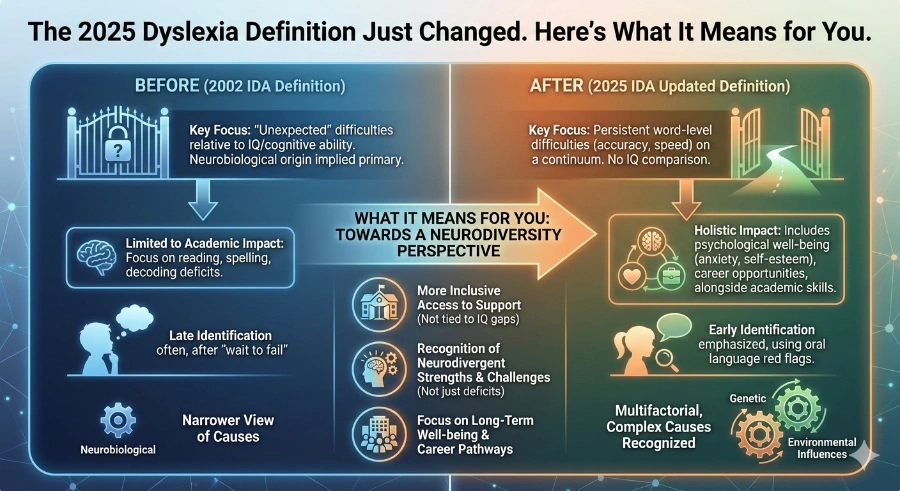
The old definition described dyslexia as difficulties “often unexpected in relation to other cognitive abilities.” Schools read that one way: check IQ scores first.
They looked for gaps between intelligence and reading performance. Your reading scores had to fall below your IQ scores by a certain amount. Not struggling enough compared to your potential? No services for you.
The new definition strips that requirement out completely. Research showed for over 20 years this approach failed students across the board. Dyslexia shows up at all intelligence levels and doesn’t care about your IQ score.
Why IQ Testing No Longer Matters
40 states allowed IQ-based testing for dyslexia identification as of 2019. That meant 40 states potentially turning away qualified students who needed help.
Please Support. Together, we can make a difference!
Who got shut out? Kids with average IQ scores. English learners still developing language skills. Students from low-income families without early literacy exposure. Students of color facing systemic barriers.
Charles Haynes co-chaired the IDA definition update. He explained it clearly: people with below-average IQs show reading difficulties that look identical to people with high IQs. The struggles are the same. Why treat them differently?
Schools can now identify students based on actual reading skills. Test phonological awareness. Evaluate decoding abilities. Assess spelling patterns. Focus on what matters instead of arbitrary score gaps.
What Neurodivergent People Actually Think About Labels
The term “neurodiversity” covers autism, ADHD, dyslexia, and other brain differences. About 15% of people identify as neurodivergent.
But does everyone love the umbrella term? Not exactly.
The concept is relatively new. There’s no firm agreement on what it should include. Some people embrace it because the framework shifts from deficit to difference. Not disorder, just variation.
Others find it too broad, too vague, or too confusing to be useful. Personal preference varies widely, and that matters when we’re talking about identity.
9,000+ Voices: The Neurodiversity Survey Results
74% of UK participants relate to “neurodivergent” when describing themselves. That’s significant agreement on the individual term.
But feelings about “neurodiversity” as the broader concept? More complicated.
Some find it empowering. It builds community across diagnoses. Sidesteps medical jargon. Reduces stigma.
Others see real problems. It lumps different experiences together. Dyslexia needs different support than autism or ADHD. The specifics get lost under the umbrella.
Here’s where frustration kicks in. Some experts misuse “neurodivergent” to mean only autism. That excludes people with dyslexia and ADHD entirely. It defeats the whole purpose of an inclusive term.
Survey participants used words like “deeply frustrating” and “necessary progress” in the same breath. One person explained it helped share information without listing every diagnosis. Another saw it as dismissive when applied incorrectly.
Why These Changes Share Common Ground
What’s really interesting here is how we’re seeing a major shift in the way we talk about learning differences. You’ve got two powerful movements happening at once that are both pushing back against the old “something’s wrong with you” approach.
The International Dyslexia Association made a really meaningful change by cleaning up their language—getting rid of words that made learning differences sound like diseases or deficits. At the same time, the neurodiversity framework has been gaining ground, offering us a completely different lens to look through. Instead of viewing these differences through a medical model that treats them as problems to be fixed, it recognizes them as natural variations in how human brains work.
What ties these together is that they’re both saying “wait a minute, maybe we’ve been thinking about this all wrong.” Rather than focusing on what people can’t do or what’s “broken,” they’re opening up space to understand learning differences as just that—differences, not disabilities. It’s a much more respectful and accurate way to think about the diverse ways people process information and learn.
They recognize the same fundamental truth. People with learning differences need support. Accommodations work. Early intervention changes outcomes. But needing support doesn’t mean you’re broken.
The shift is clear.
Old approach: fix the student.
New approach: fix the environment.
Old question: what’s wrong?
New question: what do you need to thrive?
Not everyone agrees on language choices. And that’s Ok. Some people with dyslexia embrace neurodivergent identity. Others stick with specific diagnostic terms. Both choices deserve equal respect.
What Schools Must Do Right Now
Schools need to shift away from IQ-based identification models immediately. Focus on direct assessment of reading and spelling skills instead of score comparisons.
Thirty-four states already require dyslexia screening. More will follow as the new definition spreads.
Test what actually matters. Phonological awareness. Word reading accuracy. Nonsense word decoding. Spelling patterns. These skills reveal dyslexia directly without arbitrary cutoffs.
Response to intervention sounds good in theory. But quality varies dramatically by district. A 2015 federal study found many RTI programs harm students instead of helping them. Make sure your school’s approach uses evidence-based methods.
Some voices still defend the old model. Yale’s Bennett Shaywitz worries about missing gifted students. Federal legislation like the 21st Century Dyslexia Act still includes “unexpected” language. The IDA calls this a mistake. The science supports broader identification.
Choosing Language That Respects Individual Identity
Ask people their preference instead of assuming what works. Some want identity-first language like “I’m autistic.” Others prefer person-first like “I have dyslexia.”
Don’t assume the umbrella term fits everyone you meet.
Language evolves constantly. Survey data shows healthy diversity of opinion about terminology. People think critically about how they’re described. That’s good, not problematic.
Focus less on perfect terminology. Focus more on reducing stigma while increasing support.
Create environments where differences are expected, not shocking. Provide accommodations early, consistently, and without judgment. Actions matter more than labels when it comes to actual impact on people’s lives.
Conclusion: Your Next Steps Matter
The 2025 dyslexia definition removed a barrier that shut out thousands of students. Schools can no longer use IQ scores as gatekeepers. That’s real progress worth celebrating.
But definitions only matter if schools actually implement them.
Share this information with your school district. Ask what identification methods they’re using. If they still require IQ testing for dyslexia services, push back. Point them to the updated IDA definition. Bring this article to IEP meetings.
The neurodiversity conversation reminds us that language evolves. Terms resonate differently with different people. Both reactions are valid.
Advocate loudly. Screen students early. Demand evidence-based interventions that work. Stop accepting excuses about why qualified kids can’t access help.
LDRFA provides resources and support to help advocate for this issue. You’re not alone in pushing for these changes. The learning disability community is strong, informed, and growing.
These updates prove what advocacy can accomplish. Keep going.
Ready to take action? Contact LDRFA today for free resources on navigating dyslexia identification and securing the services you deserve.